
Why chikungunya is no longer just a tropical threat
Topics in this article
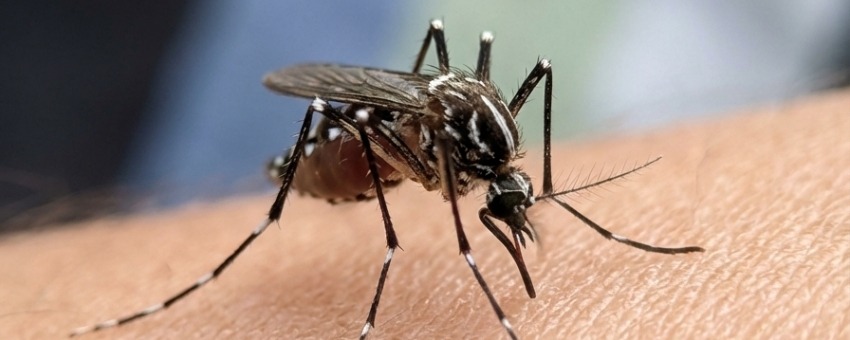
For decades, Europe has considered tropical mosquito-borne diseases a distant concern. Something that happened elsewhere. But climate change is shifting that reality. New scientific insights now show that chikungunya, a virus mainly transmitted by the Asian tiger mosquito (Aedes albopictus), can spread at much lower temperatures than previously believed. As a result, countries like Belgium are entering the risk zone faster than expected.
Lower temperatures, higher risk
Until recently, it was believed that infected mosquitoes could only transmit chikungunya at relatively high temperatures. However, a new study published in the Journal of the Royal Society Interface reveals that transmission from mosquito to human is possible from 13.8°C, which is 2.5°C lower than earlier estimates.
For Belgium, this means that mosquito-to-human transmission could be possible during summer months, with June already posing a theoretical risk in parts of the country and July and August affecting nearly all regions. Only the Ardennes remain largely unaffected. In Southern Europe, where temperatures stay higher for longer, mosquitoes can now transmit the virus for up to six months per year.
Neighbouring countries are already feeling the consequences. In 2025 alone, outbreaks caused 788 infections in France and 384 in Italy, with cases detected as far north as Paris and the Vosges, according to the European Centre for Disease Prevention and Control. Climate change is not only raising temperatures, but also reshaping vector habitats, prolonging transmission seasons, and expanding the geographical reach of mosquito-borne diseases.
A disease with long-term impact
Chikungunya often starts with flu-like symptoms: fever, headache, rash and fatigue. What distinguishes it from other mosquito-borne illnesses is its severe joint pain, which can be debilitating.
According to epidemiologists at Sciensano, joint pain can persist for months or even years, and around 40% of patients develop chronic arthritis. While deaths are rare, particularly among healthy adults, severe outcomes in children and older people cannot be excluded.
There is currently no widely available vaccine. Research is ongoing, including at Vaccinopolis (UAntwerp), which is evaluating new vaccine candidates through the European Vaccines Hub. Until vaccines become available, prevention and vector control remain the most effective lines of defence.
No mosquito, no outbreak
One fact is clear: chikungunya does not spread from person to person. Without the mosquito, outbreaks simply cannot occur. This makes vector control, and slowing the establishment of mosquitoes, essential. Once the species becomes firmly established, past experience in Southern Europe shows that outbreaks almost inevitably follow.
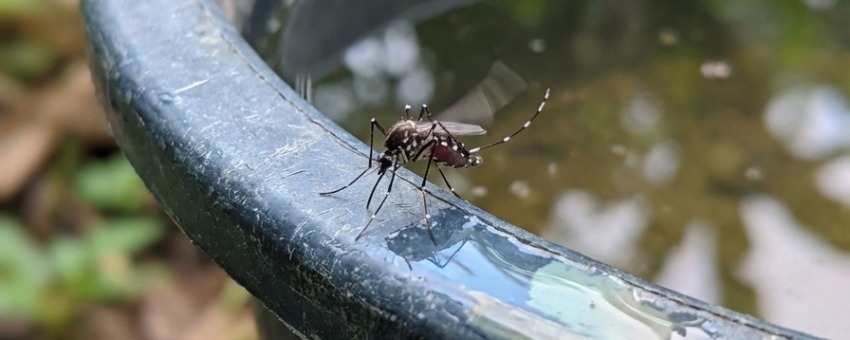
Monitoring plays a central role. In Belgium, Sciensano coordinates MEMO+, a citizen science initiative where residents can report sightings of tiger mosquitoes by submitting photos via muggensurveillance.be. This helps authorities track the mosquito’s spread and act where needed. At the same time, simple preventive steps at home make a real difference: eliminating standing water in buckets, plant saucers, gutters or pet bowls reduces breeding opportunities.
Conclusion
The northward spread of mosquito-borne diseases is no coincidence; it is a direct consequence of climate change. As temperatures rise, the question is no longer if new regions will be affected, but how prepared we are when they are.
Vector control should not be seen as a local or seasonal issue. It is a structural public health challenge for Europe, requiring:
- Continuous surveillance
- Early intervention
- Cross-border cooperation
- Long-term investment in prevention
At Aero-Sense, we believe that effective vector control is essential to protect public health, tourism and economic resilience across the EU, and beyond. In an interconnected world, mosquitoes do not respect borders, and neither do the risks they carry. By preventing the spread of vectors through international air travel, we help protect not only Europe, but global health as a whole.
Discover our insecticide solutions that keep vectors grounded.
Source: De Standaard - “Tropisch virus nu ook in België overdraagbaar van mug op mens, en het ziektebeeld is niet fraai” (18 Feb 2026)